Chest Pains. Types of Angina.Stable Angina. Part III


Hello there,
So far we've touched on the 3 main things:
  1. Angina is not a disease but rather just a term to describe chest pain
  2. The Risk Factors of Angina
  3. How angina is caused  


Today we will learn about types of angina.


Now, the thing is, since the term angina, is descriptive of chest pain, it warrants that there are different types of chest pain  that someone can have.
In medicine, angina is further broken down into different types based on the specific circumstances under which the person felt the chest pain, as well as how the pain progressed.  To bolster your general knowledge we will be considering the most common types:

  1. Stable Angina also known as Angina Pectoris
  2. Unstable Angina 
Let's learn about Stable Angina.
                                                            courtesy: hts-training.co.uk


Did You Know...in Greek, angina means strangling, and the word pectoris is derived from the Latin word pectus that simply means chest. The Strangled Chest.
 
                 
STABLE ANGINA

   Stable                                                 Angina              
http://harroldlowerschool.co.uk/wp-content/uploads/2015/01/nativity.jpg                                                          courtesy: harroldlowerschool.co.uk                                       courtesy: nattokinase.org 

    
                                                   courtesy: knowyourmeme.com                                                                                                                                                                                                                                                                                                                                                                                               
Stable Angina  is the most common of all forms of angina, and usually has a predictable way of giving you warnings.

What Triggers Stable Angina?

  • Physical activity/exertion
  • Extreme temperatures
  • Heavy meals
  • Severe Emotional Stress
  • Smoking 

What type of Pain can you feel?

  • Tightening 
  • Burning 
  • Squeezing 
  • Fullness  
  • Pressure-like sensation
...and yes the pain can feel like a case of indigestion.


Where can you feel the Pain?

  • Centre of the Chest ( This may run to the arm, especially the left arm, to wrists and the hands.)
  • Below the Breastbone
  • Arms (The arms may feel uncommonly heavy)
  • Between the Shoulder Blades


Represented below are the places on your body where you may feel the pain of Stable Angina or Angina Pectoris.
http://heartdiseaseddx.org/wp-content/uploads/2012/12/anginapectoris.jpg
             courtesy:  heartdiseaseddx.org


The pain lasts from 2 to 10 minutes and  is usually relieved by resting, and also by the use of a specific medication known as nitroglycerin.

It is also important to note that in some cases persons may not even feel chest pain, but may have episodes of shortness of breath....


Some symptoms that may appear with chest pain

  • Restlessness
  • Feeling more tired that usual (as we say Logey)
  • Dizziness
  • Nausea
  • Shortness of breath


Another revealing factor about stable angina, is that it may be a  pain that you have grown accustomed to... this means you may have noticed that you experience the pain without fail after engaging in some type of  physical activity that requires a little more effort than usual, maybe lifting something heavy, or intense exercise. The pain does not surprise you anymore you know what activities trigger it.


Take note of these characteristics, if you or a loved one have been experiencing these symptoms, go to your nearest community physician and get evaluated.
Next up...Unstable Angina.

Stay #wadadlianstrong
Blessings to you and yours.


© August 2015


Chest Pains.Understanding Angina. How is it caused? Part II


Good-day all,

In the last post we spoke about the risk factors of angina.
Were you able to identify any risk factors in yourself, friends or family members?
How many were there?


Today we'll be learning a bit about how angina or chest pain occurs, as a symptom of Coronary Heart Disease or Coronary Artery Disease. In order to do so, we'll be learning about some of the structure of the heart that were not covered in my earliest posts about Understanding Your Heart.... 

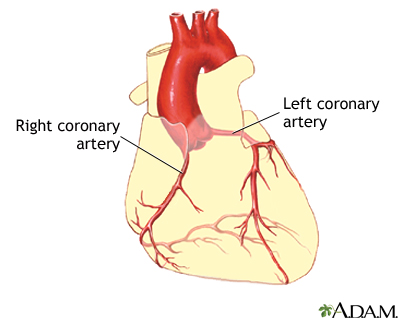
These structures are known as the coronary arteries.

What are they?
They are nothing but arterial branches from the biggest artery in our body, the aorta.
That's the big curved tube in the image right in between the labelled right and left coronary arteries.^^

Remember in Understanding Your Heart.... we learnt about how arteries are in charge of bringing oxygen rich blood to organs and cells of the body?
The coronary arteries follow that general rule, they carry oxygen rich blood, to a specific location.
The heart muscle.


       https://d13yacurqjgara.cloudfront.net/users/207059/screenshots/1404091/heartbeatdribbblesmall.gif 
courtesy dribbble.com


We know that the heart pumps blood to the body but the reality is, that the blood it pumps just isn't enough to provide its own muscle with the oxygen that it needs to continue working.
This is where the coronary arteries come in, they are so named because they surround the heart like a crown, and enable it to receive oxygen just like the other parts of our body.

When you hear the word coronary, doesn't it remind you of other words, like coronation?
Coronary comes from the latin word "corona" which means crown.


How is Angina linked to the Coronary Arteries?

Chest pain or angina develops when the Coronary Arteries become very narrowed by fatty deposits. When this happens, enough oxygen isn't able to flow as much to the heart muscle as it works.
 courtesy www.bidmc.org


The normal amount of blood the heart is accustomed to receiving has become reduced since the size of the arteries the blood flows through has also been reduced by all that plaque build up.
The heart while still maintaining the body, finds it increasingly difficult to maintain itself.

 Here are two examples in everyday life for comparison:

  1. Your vehicle uses the fuel it has to get you to your daily destination, however if it doesn't receive gas, eventually it will slowly sputter and break down. Here the reduced blood flow in the narrow coronary arteries are represented by the low amount  of gasoline your car has been running on. 
  2. You live in Bethesda and use the public transport system to get to St.John's for work, you haven't been paid in months, after a while you hardly have money to pay a bus or taxi, and have difficulty getting to work. Here the reduced blood flow in the narrow coronary arteries are represented by the low funds that you've been working with.
Can you think of any other everyday examples?
Share them with me by commenting below.


This strained environment under which the heart has to function. is worsened under conditions such as exercise or emotional stress, where the demand for the blood it needs is less than the supply it can receive.
It is precisely this circumstance that causes angina or chest pain.
        
courtesy www.gifsmile.com


Here is a link to an animation that gives a visual explanation of the angina mechanism.
Have you understood the basic mechanism of angina? If you have then please share it with a friend
....or that family member with those horrible "gas pains".


Remember in teaching we learn.
Stay #wadadlianstrong my dears.
Next up...types of angina.
Blessings to you and yours.


© August 2015