CKD and You - Symptoms, Signs & Prevention

Courtesy: i.pinimg.com

Knowledge about the Risk Factors & Causes of Chronic Kidney Disease provides a framework for this discussion about prevention. If you want to read more about risk factors or causes of chronic kidney disease click here.

Let's recap the risk factors for chronic kidney disease.


Within the risk factors, we find the ever present pressha and shugah, which also doubles as causes for kidney function decline in chronic kidney disease. You may be thinking about what signs and symptoms you should look for in order to recognise this health issue in our island...read on.


Symptoms & Signs of Chronic Kidney Disease


Be aware Wadadlians. This is a quiet disease.
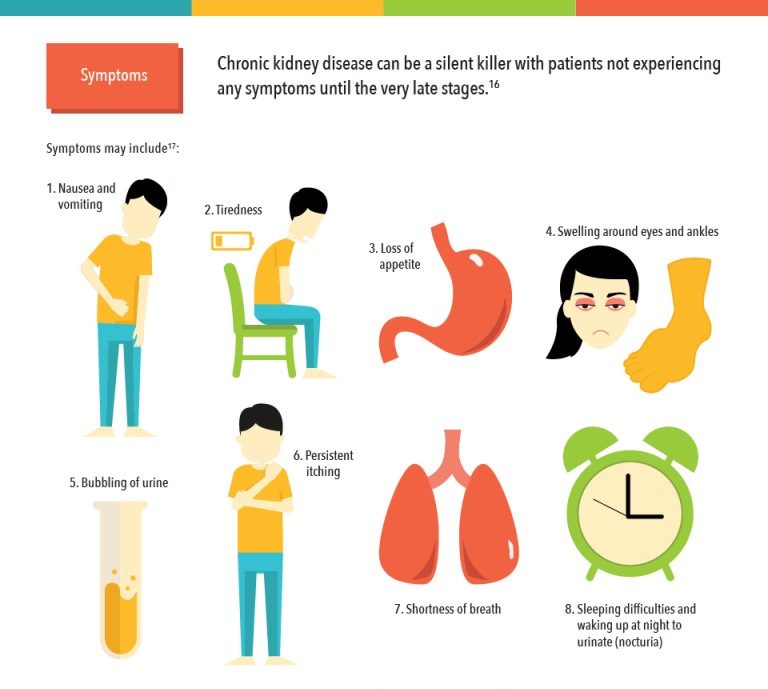
The issue with CKD is that it does not give any symptoms or signs until it has progressed towards severe kidney damage. This means while your kidney declines you may feel fine.
Kindly bear this in mind as we look at some of the symptoms and signs below.
Courtesy: beaumont.ie

  • Difficulty controlling an already high blood pressure
  • The amount of times you urinate in a day can change
  • Your urine may change in appearance, it might seem foamy or frothy, the colour may seem pinkish, cloudy, darker.
  • You may notice blood in your urine
  • Nausea and Vomiting
  • Tiredness 
  • Weakness
  • Problems Sleeping
  • Problems Concentrating
  • Headaches
  • Back pain
  • Changes in the taste in your mouth
  • Changes in how your breath smells
  • You might experience consistent itchiness
  • You might feel like you toes and hands are 'sleeping'. A pins and needle sensation
  • Your legs and face may start to get puffy, especially around your eyes
  • You may notice that your muscles twitch, and cramp
  • You may experience shortness of breath


Courtesy: timeslifestyle.net

In the initial stages of chronic kidney disease, silence is the norm. To engage in prevention you must now focus on the risk factors you've now read and seen .
If you have some of the risk factors, begin there.  Lifestyle changes must begin.

Prevention - Chronic Kidney Disease

Courtesy: techwyse.com

Let's analyse prevention by the risk factors and/causes.


  • MANAGING UNDERLYING DISEASES

If you suffer from any disease (most commonly pressha and shugah) that can cause CKD, it is important that you do your best, in conjunction with your health care provider to manage it.
Ask your doctor about your kidney health. Enquire about kidney function tests. You are your best advocate.

In Antigua and Barbuda, there are public health screenings, public lectures, information is at your disposable especially when it comes to shugah and pressha. Controlling these two conditions affects the appearance of CKD in your life.  
If you don't yet suffer from high blood pressure (or you are borderline) and are interested in prevention, you can click to read our guest post on: Preventing High Blood Pressure.


  • NYAMINGS...
Hey, food is always a sore spot, eh...but its time we seriously consider what we put inside our bodies.
The food we eat is medicine.... laaaannng buhfoa arwe go ah any dactah shap.
Real talk.
Food is medicine and we all at some point have taken it for granted. 
For chronic kidney disease prevention the following are changes you can implement in your diet:
  1. Reduce intake of soda. Yes. Instead of buying punch soda with yuh lunch, bring limade to work, or better yet (to quote every Antiguan and Barbudan/Caribbean mother)..."Jink watah".  On a more serious note though, most sodas are empty calories, and don't contribute any type of nutrition to your body. Also some sodas contain an element known as phosphorus which can hurt the kidneys.
  2. Reduce the amount of sugar in your diet.  Sodas are a good start, but what about those of us that can go through packs of candy in one sitting, or what about those of us who binge eat buckets of kidney mango when the season is on. Rome was not built in a day, but still success is possible by reducing your sugar intake a little this week, and a little more the next. Your body will thank you.
  3. Decrease processed food intake. This one is a biggie for Wadadlians. There are times when  the likkle soda-bix and vienna sausage is a quick fix. Let's be real. The issue is however, processed foods usually contain a high amount of salt, and phosphorus, and both are damaging to the kidneys. 
  4. Avoid fatty foods. Foods that are abundant in saturated fat and/or trans fats can cause cholesterol to build up in the blood vessels, over time this can lead to blockages. Our kidneys depend on blood flow in order to do its work, and to sustain itself, hence an easy flow pathway is important.
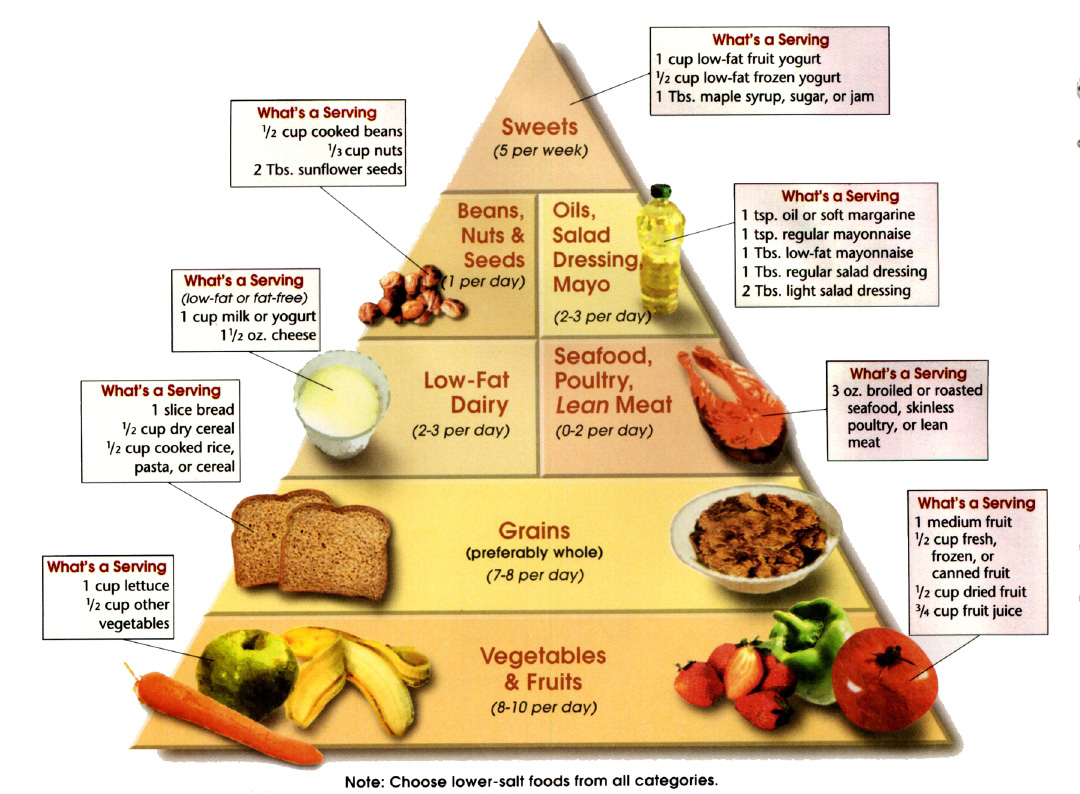
The DASH diet that has been recommended for hypertension is one that fits most lifestyles and is used by persons who may want to change their dietary habits.
Courtesy: paleoworks.wordpress.com

For those of you reading who are hypertensive, and even if you are not, here is an article that deals with hypertension prevention and the dash diet.


  • SMOKING, SMOKING
Smoking is quite frankly a risk factor for countless amounts of diseases, because of the carcinogens it produces in the body. Due to the nicotine in such products, it is addictive, and quitting, may be difficult to do. However, if you are a smoker, do consider attempting to quit with a support system that can encourage you.
  • EXERCISE
Exercise activity is essential for health.  Make time for it. It can be simple as doing a few select exercises in your house when you wake up, and before you go to bed. Not everyone will be able to take morning or late afternoon walks. Also, especially for exercise always take into consideration what you genuinely enjoy doing. Exercise does not mean having to take a gym membership. It may simply be setting aside time to play rounders or cricket outside with your family, or even taking a bike ride through your village, or going into your garden to shovel and hoe. All you need is 20 minutes of physical activity at least 3 or 4 times per week.


Make an investment in your health, most of these measures don't cost much, except for a bit of will power and commitment to make lifestyle changes. This is why some of the more well-known diseases in our community are known as preventable disease.

Indeed an ounce of prevention is worth a pound of cure.

If you've learnt something new from our posts, show us support and like our facebook page.
Share what you've learnt with your friends and loved ones.
Knowledge changes lives.
Blessings to you and yours,
Stay #wadadlianstrong


©March 2018


Chronic Kidney Disease (CKD) - Risk Factors & Causes


Worldwide and in Wadadli, non-communicable diseases are impacting our society. 

The average person can speak on pressha, shugah  because of varied community health programs in 268, and frankly, also because every tout monde, sam and baghai in our family and neighbourhoods suffer from these common diseases. Maybe even you, reading right now may suffer from hypertension, and diabetes. Along with these, there's another non-communicable disease that has been increasing its presence in Wadadli. Its known as CKD or Chronic Kidney Disease. 

In previous posts we've discussed what work the kidneys do, we've also discussed how the kidneys work, as well as their structure. If you haven't read these follow these links (Kidney Functions) (Kidney Structure)
Courtesy: timothykurek.com

What is Chronic Kidney Disease...?

It is nothing more than the loss of kidney function over time.
It sounds simple enough. However, taking into consideration the amount of work the kidneys do, this loss of function is a problematic situation.

How do you know if you are at risk for CKD? Let's have a look at some predisposing factors.

Courtesy: lifeofhopeproject.org

Risk Factors for Chronic Kidney Disease


  • Obesity (Body Mask Index of 30 and above, you can calculate yours here)
  • Smoking
  • High Cholesterol
  • Other Cardiovascular Diseases (blood vessels and heart)
  • Kidney structure abnormalities
  • Ethnicity (persons of African, Native American and Asian descent are more at risk)
  • Family History of CKD and other risk factors.
  • Age over 60 years

Take five seconds and just think about your family, your community, our Wadadli and Wa'Omoni... How many persons can you think of that has three or more of these risk factors?
Its sobering.

Interestingly some of these risk factors are also direct causes of Chronic Kidney Disease.


Causes of Chronic Kidney Disease


  • Diabetes 
  • Hypertension
  • Inflammation of the Kidney Structures (specifically those that deal with internal filtering and flow)
  • Polycystic Kidney Disease (Kidneys that have multiple cysts all over them)

Courtesy: 1.bp.blogspot.com
Courtesy: i.ytimg.com

  • Recurrent Kidney Infections ( women tend to suffer from this more than men do) 
Courtesy: exercisemenu.com
  • Prolonged Blockage of the Urinary System ( from an enlarged prostate, bladder or kidney stones, as well as certain cancers )
  • Systemic Lupus Erythomatosus (SLE)
  • Backflow of urine to kidneys (this is known as vesico-urethral reflux)

There you have it. Risk Factors and Causes of Chronic Kidney Disease.
Analyse it though... do you notice, that hypertension and diabetes, which is so common in Antigua and Barbuda are firm building blocks towards this disease?

Please.
Care yuh pressha and care yuh shugah. 
The gateway diseases lead to many others.

In the next post we will consider symptoms & signs of CKD, as well as prevention.
Remember to share this with your friends and family.
Meanwhile stay safe and #wadadlianstrong
Blessings to you and yours.


©March 2018


Courtesy: emp.yimg.com

What's Up With Kidneys? Part 2 Kidney Structure and Process


This post looks at what makes the kidney, well... the kidney.
If you'd like to know what work the kidneys do, have a look at this post about Kidney Functions.

To get into the kidney's structure...let's have a look back at the urinary system that it forms a part of.

A Super-Brief Overview of the Urinary System


From this image we can see the kidneys lie above a few structures in the urinary system. Namely, the ureters which are like 'spoutings' that take the urine from the kidneys to the bladder or 'tank' .  Last but definitely not least the urinary bladder is joined to the urethra which is like a 'pipe' which we ought to able to control in adulthood in response to the sensation to urinate. The ability to hold or release our urine, we can think of like a 'faucet' connected to the 'pipe' that turns it off and on.

Location, Location

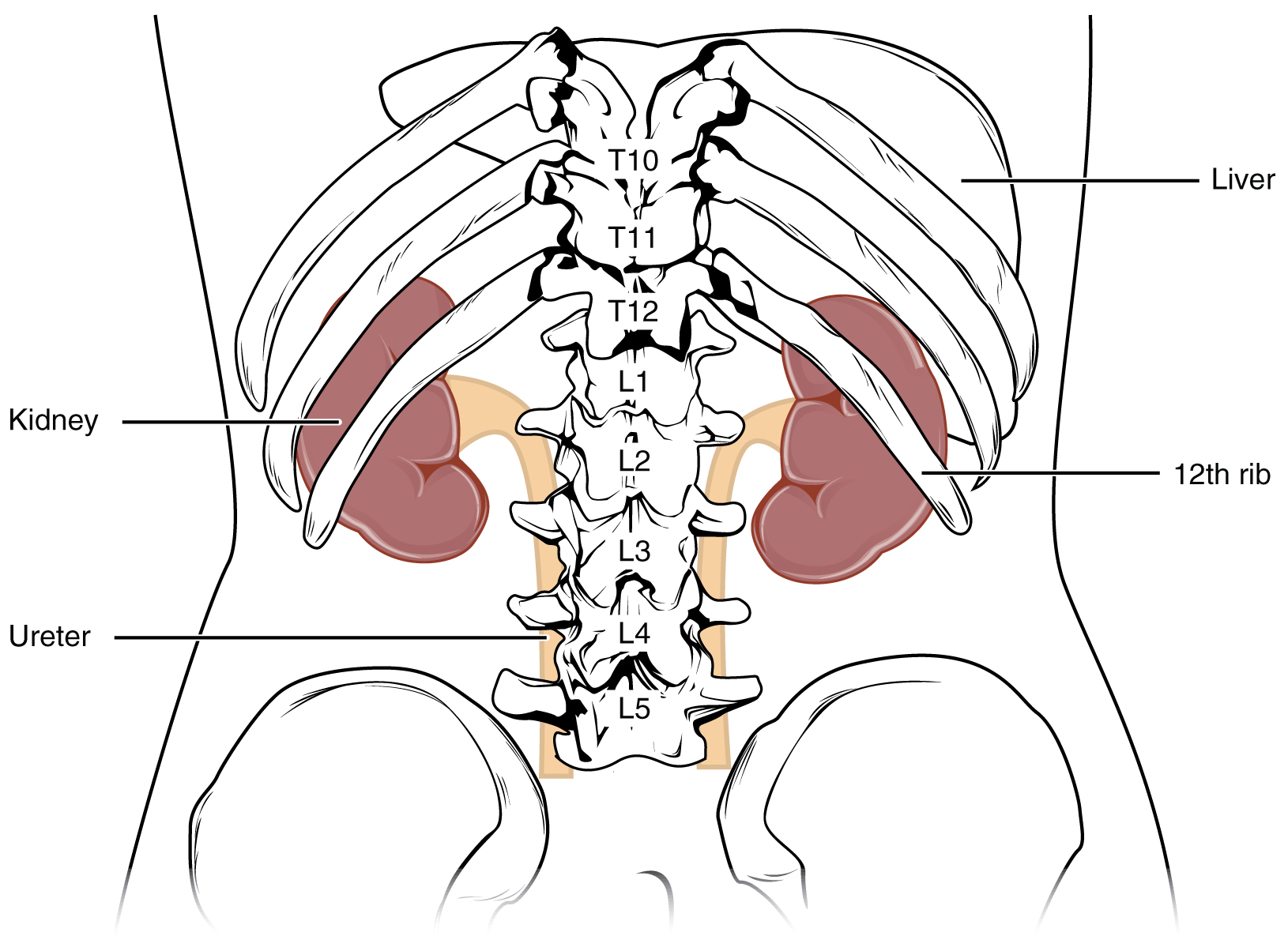
Our kidneys are similar to kidney-beans in shape and colour, they are located above our waist, nearer to our backs than our abdomen, on each side of the spine and they are partially shielded by the two last rib pairs, the eleventh and twelfth. As you can see below because of the space the liver occupies on our right side, it is normal that the right kidney is slightly lower that the left kidney.

Courtesy: philschatz.com
Generally speaking, a typical adult kidney is about the size of a bar of bath soap, 4 to 5 inches long, 2 to 3 inches wide and about 1 inch thick, a kidney can weigh between 4 to 5 ounces. It can filter around 190 litres of blood daily. That's roughly 200 quarts of blood.


How do the Kidneys Filter Blood?

To understand the way the kidneys filter blood, we first have to understand the basic structure.
At its most simple organizational level, the kidney can be divided into the renal cortex, the renal medulla and renal pelvis as shown in the image below.

Courtesy: flickr.com
The Renal Cortex: The word cortex comes from latin, it means rind. This section is the outer region of the kidney.

The Renal Medulla: This is the inner region of the kidney, as you can see each medulla is triangular with the narrow bit pointing towards the renal pelvis, and the wide part towards the renal cortex.

Together the renal cortex and the renal medulla form the Renal Parenchyma. It is in these regions the harder work of the kidney takes place. The renal parenchyma contains about 1 million microscopic structures called nephrons that function as 1 million little filters for our blood.

The Renal Pelvis: This is actually the upper portion of the ureter (the muscular tube through which the urine flows). As you can see the pelvis, is kind of funnel shaped, and it branches out upwards to the renal medulla. These branches are known as calyces.  The renal pelvis narrows downward, continuing as the ureter.

With all this is mind, have a look at the more detailed image of the kidney below.

Courtesy: pitfitness.net

Now lets analyse how all this works...

The kidney filters the blood in the body, in order for it to do that it must have a good blood supply.  This blood supply is represented in the image above by the red shadow as the renal artery.
The most impressive artery in our bodies. the aorta supplies the renal artery of each kidney with blood.  (Read about the aorta and the heart here)


This blood filled with different substances, from waste to salts, and many other elements enters the kidney and is carried to the renal parenchyma, where 1 million nephrons get to work. Each one of these nephrons contain portions which filters the blood and also help to move the formation of the urine along.
At the end of this process, the filtered blood is passed back to the body through the renal vein., and the urine formed from the cleansing process is drained into the renal pelvis, down to the ureters and into the bladder.

To Summarise...

Courtesy: rxlist.com

If you'd like to know all the functions that the kidneys are in charge of be sure to read Part 1 about all the functions our kidneys are in charge of.

I hope this simplified overview helped to put your own kidneys into a clearer perspective.
Be sure to share the info you now know with someone else.
Knowledge is power.
Blessings to you and yours
#wadadlianstrong


©March 2018


What's up with Kidneys? Part 1 Kidney Functions

How much do you really know about your kidneys?

Here's a chance to learn a bit more.


The kidneys form a part of our urinary system, represented below:
Generally speaking, all human beings have two (2) kidneys, 2 ureters, one (1) bladder, and 1 urethra.
The urinary system in its most basic form is not unlike the water system of our homes, with spoutings, tanks, and pipes.

A Super-Brief Overview of the Urinary System

The kidneys (among other functions we'll learn of in a few paragraphs ahead) filters the blood, after this filtering is done urine is left behind. This passes through the left and right ureters and is collected by the bladder till we have that sensation that tells us its time to release it. When we are ready urinate, the urine moves from our bladder through our urethra, and out of our bodies through our genital area.
For males the urethra extends through the length of the penis and is used for both urination and ejaculation, whereas in females, the urethra is a separate structure from the vagina, and is used only for urination.

Now back to the Kidneys...
Courtesy: kidneyhealth.ca


So far we know that the kidneys filter the blood...but what else do they do? Let's talk more about kidney function.

The Work of the Kidneys or Kidney Functions

As far as our urinary system is concerned the kidneys carry the bulk of the work, their tasks include:
  • Regulating the concentration of our blood. Our blood is made up of various elements, these include water, salts, sugars, and blood elements among others. In order to maintain a healthy concentration of all these substances, we depend on the kidneys to filter the blood well. When filtering, kidneys handle two important processes that impact our blood concentration.
The first is the volume of blood in our circulatory system.

When the kidneys filter the blood, they adjust the blood volume by carrying water back to the blood stream, or sending it out with the urine. An increase in our blood volume increases our blood pressure, while a decrease in our blood volume decreases our blood pressure.

The second process is the salts in our blood stream.

Besides water, the kidneys regulate blood salts such as sodium, potassium, calcium, chloride, and phosphate, these like water, can either be conserved in our body when the kidneys are filtering our blood or sent out through our urine.

Courtesy: hdwallpapersfreedownload.com
Let's move on to other tasks our kidneys perform.
  • Regulation of blood pressure.  Besides regulating our blood pressure through the blood voloume, our kidneys also regulate our pressure because of a certain protein it produces known as renin. Increased renin increases our blood pressure.
  • Regulation of the acidity or alkalinity of our blood.  This is also through the filtering process. Our blood contains hydrogen as well as bicarbonate, both of these contribute to the acidity or alkalinity of our blood stream respectively.
  • Hormone production. Did you know our kidneys produce hormones? If you didn't well, now you do. The kidney is indeed a multi-tasker. It produces two hormones, the first is pronounced cal-see-tree-ol. The second hormone  the kidney produces is pronounced eri-throw-po-yetin.
Calcitriol (cal-see-tree-ol) is actually a form of vitamin D. It actively helps us maintain the right amount of calcium in our bodies, and help with bone strength.
Erythropoietin (eri-throw-po-yetin) helps us produce red blood cells. Yes! The kidney is what helps us produce those red blood cells. Care your kidney, care your blood.


  • Regulation of Glucose Levels The kidneys can also regulate the sugar levels in the blood, as they are able to generate glucose and release that into the blood to help contribute to a normal glucose level.

Last but not least, this task of our kidneys is pretty well known, and is commonly spoken of more than some of those listed here. 

  • Waste excretion Our kidneys get rid of waste products in our blood stream that can harm us, or are no longer useful for our body's upkeep. These are found in our urine, you may have heard of ammonia, others include toxins from our environment, drugs, and even from our diet.
That's all for now folks. Look out for part 2 as we look at the structure of our kidneys.
Stay #wadadlianstrong, and share this article about kidney function!
Blessings to you and yours.


©March 2018

Flu Complication Warning Signs


We've recently explored some 268 Flu Tactics in our fight against the flu. The post (268 Flu Tactics) explored various ways we all can keep the flu virus at bay, as well as care for ourselves as much as we can by using mostly lifestyle modifications, to protect ourselves and those around us.

In this post, I would like to explore complications of the flu virus and those persons in our populations who are at high risk for those complications. The flu in adult on average lasts between 3 to 7 days, however in some people it can extend up to 10 days.

Usually the flu runs its course and resolves within the time mentioned above, however there are times where its symptoms hangs on, rebounds or even worsens. It is therefore very important for each Wadadlian to know warning signs of a worsening viral flu infection and its possible complications.

Flu Complication Warning Signs

  • Flu symptoms that improve then return with a high fever and worsened symptoms such as increased cough, aches, chills, headaches, fatigue.
  • Fever greater than 37.6 degrees Celsius or 99 degrees Fahrenheit
  • Chest pain or pressure
  • Abdominal pain
  • Shortness of breath or difficulty breathing
  • Severe Vomiting or Diarrhoea
  • Seizures
  • Fainting spells
If during the progress of a flu infection you or a loved one experiences this, it is time to get help and consult your nearest healthcare provider.


Complicated flu infections can progress to illnesses such as pneumonia, muscle inflammation (rhabdomyolysis), meningitis among many others. Please do not ignore your body's cry for help.

Now we know what warning signs to look out for, what about knowing which persons in our community that are at high risk for developing Flu Complications?

Persons at High Risk for Flu Complications

  • 6 month old babies and older children up to 5 years
  • Adults 65 years old and over
  • Pregnant Women
  • New mothers (up to 2 months after birth)
  • Nursing home residents
Persons who suffer from certain medical conditions are also at risk:
  • Persons with the following medical conditions:
  1. Cancer
  2. AIDS/HIV
  3. Diabetes Mellitus
  4. Sickle Cell Disease
  5. Persons who use a regular treatment regimen of steroids
  6. Epilepsy, stroke and other neurological conditions
  7. Kidney Disease
  8. Asthma
  9. Obstructive lung disease
  10. Weight disorders (extreme obesity or anorexic states)

Kindly take these elements into consideration if you or a loved one becomes infected with the flu virus. Remember to review the 268 Flu Tactics but if warning signs appear, do not wait, go to your healthcare provider immediately.


Wishing you all the best, and much blessings
#wadadlianstrong

© 2018


268 Flu Season Tactics


The flu season is upon us...some of us are reading this in bed with body aches, chills, runny noses, eyes, and temperatures. Some of us are worrying about loved ones who just don't seem to be able to get through it, while others of us are sending love to family member and friends... from a distance, trying to show we care but still informing them that though its all love we've been there, done that and aren't keen on experiencing this particular rollercoaster willingly if we can avoid it.

What is the Flu Virus?


The flu or influenza virus that is made up of 3 strains. They are known simply as A, B, and C (rare type). This viral infection targets the body's respiratory system.


The influenza A and B virus are usually in rotation around the winter and autumn months in temperate countries, though some tropical areas may experience their effects all year round.

In recent times one of the most popular strains of influenza A is the H1N1( swine flu), whose warning banners you will encounter throughout the airports of our region. The A virus has other subtypes such as H3N2, and H5N1 (avian flu), among various others.

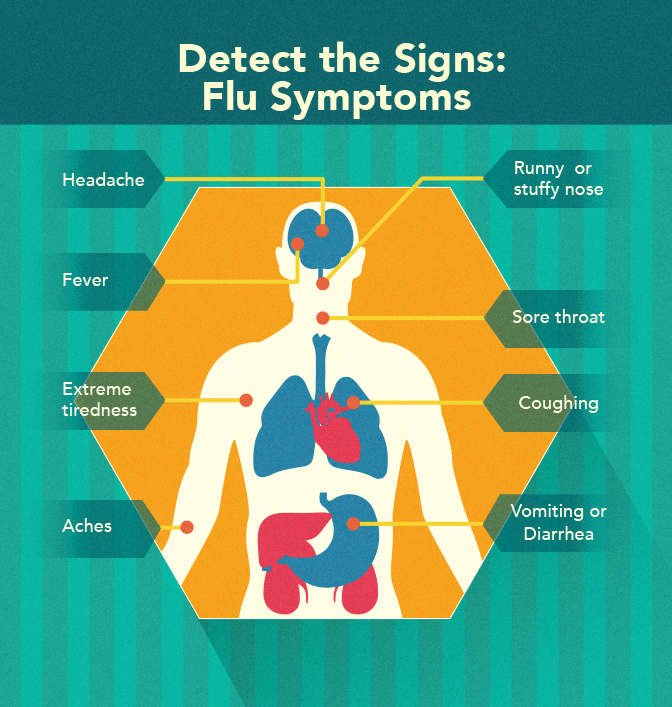
Most, if not all of us know what symptoms we experience when infected with the flu virus, but here's a summary:

https://www.fix.com/assets/content/15511/detect-flu-symptoms.png
Courtesy www.fix.com

Now we have an idea of what the flu virus is, and how it affects us, let's have a look at tactics we all can use to help reduce our risk of flu infection.

268 Flu Season Tactics

  • Those of us perceived as insensitive for staying away are actually on to something. Less contact with infected persons will obviously mean reduced risk of infection. As a result, if possible this is a relevant plan of action.


If you are caring for someone at home who has the flu be sure not to share eating utensils, and dishes without washing them carefully first. Keep their personal items separate in the home.

Try your best to also disinfect surfaces that are often touched by your sick loved one.


Courtesy www.webmd.com

  • Wash your hands often with soap and water for at least 20 seconds. If you are not able to at least have on hand an alcohol based hand sanitizer. Be sure your hands are clean before and after meals, in public areas and restrooms, after touching possibly contaminated surface.
  • Avoid touching your face. This is the easiest way to contaminate yourself with the virus.
  • Exercise. Exercise actually helps to raise the level of your immune system and ward off infection.
  • Health Eating Habits. Remember food is fuel, you can either use it to help your body by boosting your immune system or harm it by feeding it empty calories. Eating a nutritious, balanced diet is key.
  • Keep hydrated. Water aids the body in resisting infection.
  • Keep your stress levels in check. Stress can weaken your immune system, thus making you more vulnerable to infection. 

But what if you are already infected?

Well, here are some rules for you

For those of us who are sick or have children who are sick...and know it...sharing in this case is not equivalent to caring.
  • Kindly. Stay at home. Kindly. Stay away from work or school if you are sick. Kindly. Keep your child or children isolated from other children as much as you can.  This is not only to ensure the efficiency of  body's healing process, but for the good of others in our community. This is caring in action.The flu can be spread via droplets in the air one day before symptoms show, and up to 5 to 7 days after symptoms come about.
  • When coughing or sneezing cover your nose and mouth with a tissue. You should also sneeze or cough into your arm as opposed to your hand. Remember also to dispose of your used tissue paper.
  • Drink lots of fluids, to prevent dehydration. Preferably water and vitamin C rich liquids.
  • Eat easy to digest meals, like warm chicken soups, or vegetable broths.
  • REST. Give your body time to overcome the process.
  • Keep fever medication on hand and a trusty thermometer.
  • If you feel unsure how to handle your symptoms, or if you feel that you or a loved one is getting worse, consult your health care provider immediately.
Most of these suggestion are based on lifestyle modifications, as in Antigua & Barbuda many Wadadlians choose to let the viral illness run its course with symptomatic care, however, when doing so please keep these rules in mind, especially the last one, as the flu like any other illness can have complications.


I hope this gave you some perspective about the flu. If you want to read about how your body warns you your flu may be becoming complication,  check out this post on Flu Complication Warning Signs. Meanwhile stay safe and stay #wadadlianstrong.

Blessings to you and yours.

© 2018