Breast Cancer Warning Signs. Risk Factors

courtesy primadonna.eu


Every year in October, the nations of the world come together via different events using popular platforms such as social media  to shed an even brighter spotlight on a disease that has taken and still continue to take unique women from our lives.

Breast cancer has been around since the times of  Ancient Egypt and Greece, however it was in the early 90's that the pink ribbon emerged as a symbol of unrelenting revolt against a disease that had affected so many lives for so long.

At the centre of this fight, is not only growing areas of breast cancer research, but also the task of preventive measures that are geared toward educating communities everywhere about the signs of the disease to enable early detection.


BREAST CANCER WARNING SIGNS


  • The Dreaded Lump
Finding a lump in the breast one of the main, and terrifying factors that usually inspires a doctor visit, as its presence is greatly associated to breast cancer.

For many women the texture of their breast may already feel quite lumpy, this is ok, since the breast tissue under the skin has a lumpy texture.

Let's take a brief look at what the breast is made up of...


 courtesy www.soc.uscb.edu

N.B (Mammary glands is just a term used to describe the structures that produce milk.)

As you can see under the skin its not exactly smooth sailing, however, it is important that each woman is strongly aware of what her breast normally feels like. 

This way, if there is a particular lumpiness that is different from what is considered to be normal, one that may feel harder compared to the rest of your breast, your next stop should be to a doctor. Please note that it is also possible to find lumps under the arms.


It is important to mention here, that there are conditions such as cysts and fibroadenoma (non-cancerous tumours) that cause lumps in the breasts. Some women reading this now may have already suffered from these conditions. Some women may have had a non-cancerous lump in their breast for years. Despite this, if this lump changes in size and texture, or you find a new lump, do not assume it is just the same thing repeating itself. 

A new lump, can be a different lump, and an old lump, can become a different lump.

Remember, do not assume... an ounce of prevention is worth a pound of cure. 

 
  • Painful and Tender Breasts 
courtesy medicalnewstoday.com

To be quite frank, something as simple as a badly adjusted brassiere can cause breast pain for women. Tenderness and painful breasts can also be linked to other events, such as the menstrual cycle, the use of birth control pills. Also, women who are very well endowed may also have breast pain that is associated to back and neck pain. 
However... although pain is not as noticeable as a lump or as frequent as a sign of breast cancer, it ought not be taken for granted, especially when:
  1.  It comes outside of the menstrual cycle
  2. Continues through and after your period
  3. It is a new pain located in one particular spot that isn't relieved by anything.
  4. Is associated with a lump and the other signs that follow.


  •  Changes in Breast Size, and Shape
Many women have asymmetrical breasts. This basically means one breast may be slightly larger than the other. Warning signals ought to sound off if you notice that one breast may be increasing in size for no apparent reason, or if you find the same breast may have a different shape, and seem swollen.
The skin covering the breast tissue also has its own way of showing you that something more sinister may be happening underneath it. Take into consideration:
  1. Darkening of the skin
  2. Dimpling/pitting of the skin, similar to that of an orange. Click here
  3. Itchiness, and redness, or the appearance of an unexplainable rash 
  4. The skin of the breast in question may be uncharacteristically warmer than that of its twin.  

  •  Never forget the Nipples
The breast nipples as well as its surrounding area, known as the areola, can also give signs that may indicate breast cancer. 

  • You may notice a discharge from the nipple that drains either by itself or when you apply pressure. This discharge may be clear, yellow, slightly bloody, or even brownish. 
  • The nipple may seem to be a bit off the centre, as if being pulled downwards. This is known as retraction.  

                                                       courtesy personalhealthcart.com
 
  • There are some women who are born with inverted nipples, but if you aren't one of these women and your nipple has progressively become inverted, this is a very worrying sign that may indicate breast cancer.

courtesy www.plasticsurgery4cyprus.com

  • Nipples themselves may change shape, or you may notice that your nipples start to itch and become flaky and develop a rash or sore that is difficult to heal.

All these signs are even moreso telling as they usually occur only in one breast, that becomes a quite uncomfortable comparison to the other that does not change. 

At times, even though presenting with one, or more of these signs, there are women who still ignore or deny the possibility of breast cancer. 

In a way this is understandable as fear of discovering something that is more than unpleasant... to say the least is at times frightening and the only way we think we can protect ourselves from facing this fear is denying that a problem exists.

Sadly, ignoring the problem, does not make it go away, but only worsens the outcome. 
This is why education about early detection is one of the hallmarks of breast cancer awareness.

Lets Summarize...

 
courtesy cancerworld.info

If you have any of these signs. Go to the nearest doctor. Refuse to wait any longer, and take control of the life given to you. Early detection means a better outcome.

Please click to see the ---> 5 easy steps to the breast self examination.

The video below is a very informative animation of how a breast self exam is also done.
courtesy health central youtube channel

Check out  supplementary reading from the Mayo Clinic.

Wear your pink ribbon proudly. Share the information. Stay Aware.
Do you know the risk factors of breast cancer? Check out the upcoming post.
Blessings to you and yours,
#wadadlianstrong,


 © October 2015


A Special look at Angina in Women Part II. Types of Angina. Prinzmetal Angina.

Prinzmetal Angina


                                                          courtesy knowyourmeme.com


First off, Prinzmetal Angina is rare, it represents roughly 2% of angina cases.
It is known to affect women; specifically younger women.


It is caused by spasms in the coronary arteries, that cause a momentary reduction in the blood flow to the heart resulting in severe chest pain which occurs usually while resting either at night or early morning.


What causes the spasms of Prinzmetal Angina?

  • Smoking
  • Cocaine Use (cocaine causes arterial spasms)
  • Amphetamine Use (amphetamines also cause arterial spasms)
  • Stress
  • Endothelial dysfunction - (this is a medical term that describes the abnormally functioning inside lining of blood vessels) it is associated with Microvascular Angina.
Prinzmetal Angina often comes and goes in cycles.
It is known by other names such as Angina Inversa and Variant Angina.

This post is more of an addition to your general knowledge that there is another type of angina that though rare can affect women.

 Read more about coronary spasms at the Mayo Clinic website.


It's October! 
This month is dedicated to Breast Cancer Awareness, honouring the brave survivors and equally brave loved ones who have passed on.
Support the cause by your pink ribbons and outfits. 
Look out for articles dedicated to Breast Cancer Awareness....

Blessings to you and yours,
 © October 2015


A Special look at Angina in Women Part II. Other Types of Angina. Microvascular Angina.


Do you agree?

In my last post, A Special Look at Angina in Women, I referenced vessel size as a difference between men and women, what did I mean by that?

Well, we've learnt up to this point that it is quite common for men to suffer from angina because of blocked coronary arteries. Whereas women can also have blocked coronary arteries, it is also widely accepted that heart disease in women can debut in the smaller arteries that branch out from the coronary arteries without any obstructions present. 

This is known as Microvascular Disease or MVD.

How is Microvascular Disease Caused?

Microvascular Disease and its effect in women's health is still being studied worldwide, however, here is a general idea of how it comes about:


Bear in mind that there are other names which are synonomous, that you might see  instead of of Microvascular Disease or MVD. Here's a list:
  • Small Vessel Disease
  • Small Artery Disease
  • Cardiac Syndrome X
  • Non-obstructive Coronary Heart Disease

 What does all this have to do with Angina?

Well, Microvascular Disease is associated with a type of Angina known as Microvascular Angina. 
Here's an overview.

For More Reading:


Did you know....

 Singer of the popular 2003 hit song "Unbreak My Heart", Toni Braxton was diagnosed with Microvascular Angina in 2008 at the age of 40.

Read more here.

Interview with You Magazine UK, May 9th 2010 p.47 
"I had a 23 per cent blockage in my micro-arteries. At first the doctors thought I needed a heart transplant, then they said I have microvascular angina, which means I will be on medication for the rest of my life."
Toni Braxton


                    courtesy welovetoni.com


Another type of angina, which is rare but is considered to be more common in females is known as Prinzmetal Angina.

To see my post on Prinzmetal Angina click on the image of Prince  in a metallic background below:

PrinZmetal Angina

http://wadadlianhealthblog.blogspot.com/2015/10/a-special-look-at-angina-in-women-part_8.html
courtesy cdn2.pitchfork.com


That's all for now folks. Be sure to read up on Prinzmetal Angina, the last post in our series about Angina in Women, and the topic of Angina as a whole. 

Soon enough we'll be touching on the dreaded Heart Attack, but first...

October is Breast Cancer Awareness Month and in honour of this cause, there will be upcoming posts about breast health, and preventative measures all women can practice...


Stay tuned and most importantly stay #wadadlian strong.
Blessings to you and yours,


© October 2015


A Special Look at Angina in Women Part I. An Overview

          Laundry Block          
  From the West Indian Washer Woman Series

Who does the woman in the image above remind you of?
Your mother, an aunt maybe, your grandy?

No matter who this person represents for you, it is important to let her know that angina affects women just like men. How do you do this?

Through educating your own self. This post will provide a start.


By now you should know that angina is a symptom of CHD or Coronary Heart Disease, it is also synonymous to chest pain, however, it so happens that for women, chest pain does not necessarily have to occur when suffering from angina.
Simply put women can have the following symptoms with or without chest pain present:
  • Shortness of breath
  • Nausea
  • Abdominal Pain
  • Discomfort in the jaw, neck, back and/or arms
  • Weakness and/or Fatigue
 Also if chest pain is present, as opposed to the pressure-like sensation that is common, some women may complain of a sharp, stabbing pain.
courtesy www.medicalnewstoday.com

The cause of angina in both men and women is similar, it is due to blocked coronary arteries.
Do you remember the full mechanism of how angina is caused?
To find out read an older post here.

Despite the fact that blockage of the coronary arteries is the standard for both sexes. There is a difference in size as far as women are concerned...
What do I mean by this?
Well, we'll talk about this in the next post where you'll learn about two other types of angina, less common than Stable Angina and Unstable Angina that are associated with women.

Here is a beneficial article by the American Heart Association that will help you review angina and prepare you for the upcoming posts. Angina in Women Can be Different than Men.

In the mean time share your newfound knowledge with a family member.
Begin a discussion at home.
Let's talk about angina.

Click on the image and participate in the poll:

Do you think women tend to ignore chest pain more than men?

 Do you think women tend to ignore chest pain more than men?


Keep sharing and reading.
Above all stay #wadadlianstrong.
Blessings to you and yours,


 © September 2015

Chest Pains. Types of Angina.Unstable Angina. Part III


Heart Beat 


Today our topic is about a second common type of angina, known as unstable angina. To refresh your memory on the the first type of angina we looked at click here.


WHAT IS UNSTABLE ANGINA?


       UNSTABLE                                                ANGINA
                                                                                                                                                                                       
        
                                                                       courtesy: knowyourmeme.com


First let me get this out of the way:   
Unstable Angina = immediate phone call  to the EMS/911.

Keep that in mind as we discuss Unstable Angina.
The cause of unstable angina is linked to the narrowing of the coronary vessels around the heart due to obstruction. We learnt about this in the post Chest Pains. Understanding Angina. How is it Caused? Part II 

Unstable Angina is based on the worsening of these same mechanisms, and  has an unpredictable way of manifesting itself... unlike Stable Angina which follows a predictable pattern.


( For more insight see my last post Chest Pains. Types of Angina. Stable Angina. Part III)

Both Stable and Unstable Angina share similar characteristics as far as the cause of the pain, what the pain may feel like, as well as where the pain is located. 


  • Anginal pain is most commonly described as pressure in the chest that runs to the left arm and neck.

Below is a visual aid of more locations of anginal pain courtesy shareslide.com


However similarities come to an end in terms of pattern and predictability since Unstable Angina plays by different rules.

Characteristics of Unstable Angina


  • Unstable Angina appears whenever it likes, for those who already suffer from stable angina, you may notice your chest pain does not follow the triggers that you  have become used to.  The heart does not have to be working harder than it usually does.  It does not depend on overexertion, so it can occur at rest; it is RANDOM.
  •  With Unstable Angina the times chest pain usually the chest pain you feel is much more severe.
  • Also, the time the chest pain stays with you is longer in Unstable Angina, easily surpassing ten minutes, as well as 20 minutes.
  •  If you are on medication for angina, you may notice that even after using your medication sometimes, you have no relief from the chest pain.
  •  Along with the chest pain you feel, you may also experience sweating, shortness of breath, nausea and vomiting.

Which brings me back to the first point I wanted to get out of the way.  Unstable angina is  a forewarning of an impending heart attack and this is the reason why...

Unstable Angina = immediate phone call  to the EMS/911


 Prevention is indeed better than the cure, so if you are in a situation where you may have symptoms such as these or even those mentioned in the post about Stable Angina, its about time that  you get yourself to a doctor for evaluation of your condition.

If you remember nothing else remember this...


Hope you've learnt a lot today about Unstable Angina. 

Here are some websites for more info:

Interested in seeing how Angina happens on the inside of our bodies?
Press play to see the animation.  


courtesy: Speak from the Heart Youtube channel


Stay #wadadlian strong
Blessings to you and yours...


 © September 2015


Chest Pains. Types of Angina.Stable Angina. Part III


Hello there,
So far we've touched on the 3 main things:
  1. Angina is not a disease but rather just a term to describe chest pain
  2. The Risk Factors of Angina
  3. How angina is caused  


Today we will learn about types of angina.


Now, the thing is, since the term angina, is descriptive of chest pain, it warrants that there are different types of chest pain  that someone can have.
In medicine, angina is further broken down into different types based on the specific circumstances under which the person felt the chest pain, as well as how the pain progressed.  To bolster your general knowledge we will be considering the most common types:

  1. Stable Angina also known as Angina Pectoris
  2. Unstable Angina 
Let's learn about Stable Angina.
                                                            courtesy: hts-training.co.uk


Did You Know...in Greek, angina means strangling, and the word pectoris is derived from the Latin word pectus that simply means chest. The Strangled Chest.
 
                 
STABLE ANGINA

   Stable                                                 Angina              
http://harroldlowerschool.co.uk/wp-content/uploads/2015/01/nativity.jpg                                                          courtesy: harroldlowerschool.co.uk                                       courtesy: nattokinase.org 

    
                                                   courtesy: knowyourmeme.com                                                                                                                                                                                                                                                                                                                                                                                               
Stable Angina  is the most common of all forms of angina, and usually has a predictable way of giving you warnings.

What Triggers Stable Angina?

  • Physical activity/exertion
  • Extreme temperatures
  • Heavy meals
  • Severe Emotional Stress
  • Smoking 

What type of Pain can you feel?

  • Tightening 
  • Burning 
  • Squeezing 
  • Fullness  
  • Pressure-like sensation
...and yes the pain can feel like a case of indigestion.


Where can you feel the Pain?

  • Centre of the Chest ( This may run to the arm, especially the left arm, to wrists and the hands.)
  • Below the Breastbone
  • Arms (The arms may feel uncommonly heavy)
  • Between the Shoulder Blades


Represented below are the places on your body where you may feel the pain of Stable Angina or Angina Pectoris.
http://heartdiseaseddx.org/wp-content/uploads/2012/12/anginapectoris.jpg
             courtesy:  heartdiseaseddx.org


The pain lasts from 2 to 10 minutes and  is usually relieved by resting, and also by the use of a specific medication known as nitroglycerin.

It is also important to note that in some cases persons may not even feel chest pain, but may have episodes of shortness of breath....


Some symptoms that may appear with chest pain

  • Restlessness
  • Feeling more tired that usual (as we say Logey)
  • Dizziness
  • Nausea
  • Shortness of breath


Another revealing factor about stable angina, is that it may be a  pain that you have grown accustomed to... this means you may have noticed that you experience the pain without fail after engaging in some type of  physical activity that requires a little more effort than usual, maybe lifting something heavy, or intense exercise. The pain does not surprise you anymore you know what activities trigger it.


Take note of these characteristics, if you or a loved one have been experiencing these symptoms, go to your nearest community physician and get evaluated.
Next up...Unstable Angina.

Stay #wadadlianstrong
Blessings to you and yours.


© August 2015


Chest Pains.Understanding Angina. How is it caused? Part II


Good-day all,

In the last post we spoke about the risk factors of angina.
Were you able to identify any risk factors in yourself, friends or family members?
How many were there?


Today we'll be learning a bit about how angina or chest pain occurs, as a symptom of Coronary Heart Disease or Coronary Artery Disease. In order to do so, we'll be learning about some of the structure of the heart that were not covered in my earliest posts about Understanding Your Heart.... 

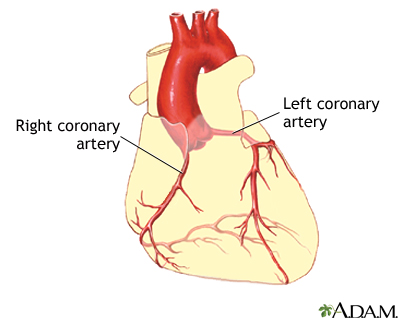
These structures are known as the coronary arteries.

What are they?
They are nothing but arterial branches from the biggest artery in our body, the aorta.
That's the big curved tube in the image right in between the labelled right and left coronary arteries.^^

Remember in Understanding Your Heart.... we learnt about how arteries are in charge of bringing oxygen rich blood to organs and cells of the body?
The coronary arteries follow that general rule, they carry oxygen rich blood, to a specific location.
The heart muscle.


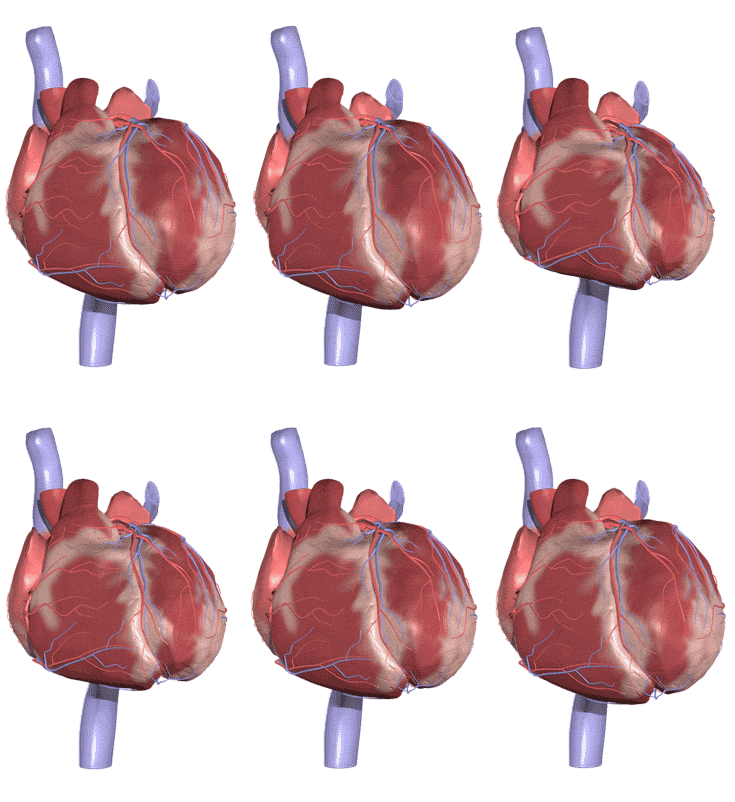
       https://d13yacurqjgara.cloudfront.net/users/207059/screenshots/1404091/heartbeatdribbblesmall.gif 
courtesy dribbble.com


We know that the heart pumps blood to the body but the reality is, that the blood it pumps just isn't enough to provide its own muscle with the oxygen that it needs to continue working.
This is where the coronary arteries come in, they are so named because they surround the heart like a crown, and enable it to receive oxygen just like the other parts of our body.

When you hear the word coronary, doesn't it remind you of other words, like coronation?
Coronary comes from the latin word "corona" which means crown.


How is Angina linked to the Coronary Arteries?

Chest pain or angina develops when the Coronary Arteries become very narrowed by fatty deposits. When this happens, enough oxygen isn't able to flow as much to the heart muscle as it works.
 courtesy www.bidmc.org


The normal amount of blood the heart is accustomed to receiving has become reduced since the size of the arteries the blood flows through has also been reduced by all that plaque build up.
The heart while still maintaining the body, finds it increasingly difficult to maintain itself.

 Here are two examples in everyday life for comparison:

  1. Your vehicle uses the fuel it has to get you to your daily destination, however if it doesn't receive gas, eventually it will slowly sputter and break down. Here the reduced blood flow in the narrow coronary arteries are represented by the low amount  of gasoline your car has been running on. 
  2. You live in Bethesda and use the public transport system to get to St.John's for work, you haven't been paid in months, after a while you hardly have money to pay a bus or taxi, and have difficulty getting to work. Here the reduced blood flow in the narrow coronary arteries are represented by the low funds that you've been working with.
Can you think of any other everyday examples?
Share them with me by commenting below.


This strained environment under which the heart has to function. is worsened under conditions such as exercise or emotional stress, where the demand for the blood it needs is less than the supply it can receive.
It is precisely this circumstance that causes angina or chest pain.
        
courtesy www.gifsmile.com


Here is a link to an animation that gives a visual explanation of the angina mechanism.
Have you understood the basic mechanism of angina? If you have then please share it with a friend
....or that family member with those horrible "gas pains".


Remember in teaching we learn.
Stay #wadadlianstrong my dears.
Next up...types of angina.
Blessings to you and yours.


© August 2015